
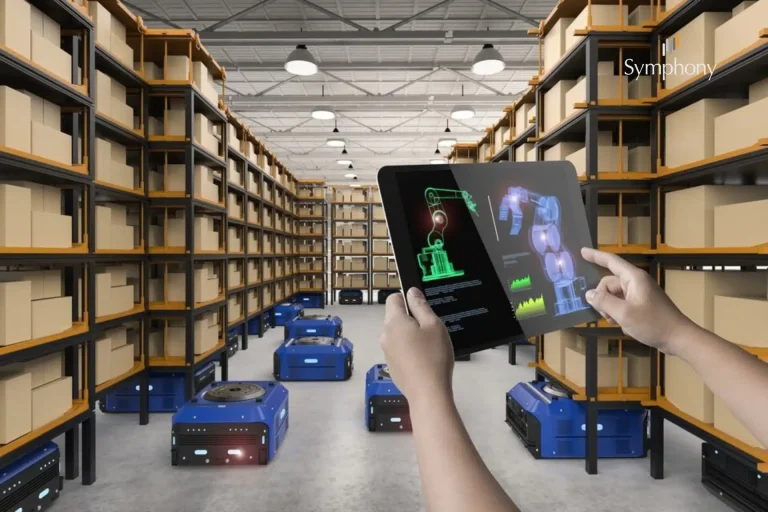
Managing a warehouse effectively is no easy task. From receiving inventory to fulfilling customer orders, a warehouse operates like a well-oiled machine—if everything is in sync. Enter the Warehouse Management System (WMS), a software solution that optimizes and automates warehouse operations, making them faster, more accurate, and less error-prone.
A Warehouse Management System tracks the entire inventory, improves order accuracy, assigns employee tasks, and integrates with other systems like Enterprise Resource Planning (ERP) software. In today’s competitive market, where speed and accuracy are everything, a WMS has become indispensable for businesses aiming to thrive.
This comprehensive guide will explore everything you need to know about WMS, including its benefits, functionalities, types, and real-world applications. Whether you’re running a small warehouse or a global distribution center, a Warehouse Management System can transform the way you work.
A Warehouse Management System serves as the operational backbone of a warehouse. It manages the entire flow of goods—from when inventory arrives to when it’s shipped to customers. By automating and streamlining processes, a WMS reduces human errors, saves time, and ensures that resources are used efficiently.
Unlike manual systems or spreadsheets, a WMS provides real-time visibility into inventory levels and operations. It integrates with ERP and Transportation Management Systems (TMS), creating a unified system that improves supply chain efficiency. Whether it’s optimizing storage space or guiding workers to pick items faster, a WMS acts as the nerve center of the warehouse processes.
Warehouses face numerous challenges: inaccurate inventory counts, misplaced stock, delayed shipments, and labor inefficiencies. A WMS tackles these problems head-on by simplifying workflows, automating repetitive tasks, and providing actionable insights.
Businesses that implement a WMS often see inventory accuracy rates improve to 99.6%, a significant jump from the industry average of 63% for retail operations using manual systems. The average U.S. retail business has an inventory accuracy of only 66%, but proper implementation of item-level tagging and WMS can boost inventory accuracy to 97%. In terms of order fulfillment speed, warehouses that adopt automated handling solutions can reduce material handling time by up to 40%, according to McKinsey, with best-in-class warehouses achieving order accuracy rates of 99.5-99.9% and service levels (On-Time in Full or OTIF) of at least 98-99%.
Retailers like Amazon and Walmart use advanced WMS solutions to process millions of orders daily. This level of operational efficiency wouldn’t be possible without a system that tracks inventory, optimizes picking routes, and ensures fast shipping. According to a report, the WMS market was valued at $3.99 billion in 2020 and is expected to grow significantly, highlighting its importance in modern supply chain management.
A WMS provides a suite of tools that make warehouse operations smoother and more efficient. Here are its core features:
These features not only make day-to-day operations easier but also provide a foundation for long-term growth and scalability.
Keeping track of inventory is one of the most challenging aspects of running a warehouse. A WMS automates inventory control, ensuring that stock levels are always accurate. Businesses can avoid overstocking or stockouts, which can lead to lost sales or wasted resources.
Companies using WMS often report inventory accuracy rates of 99%, a massive improvement over the average manual tracking system.
Efficiency is critical in warehouse operations. A WMS optimizes workflows by automating repetitive tasks and streamlining processes. For instance, it can suggest the best storage locations for incoming stock or guide workers along the fastest picking routes.
Mistakes in order fulfillment can lead to costly returns and dissatisfied customers. A WMS minimizes these errors by automating picking and packing processes, ensuring that the right items are shipped every time.
While a WMS requires an upfront investment, the long-term savings far outweigh the costs. Automating tasks reduces the need for manual labor, while better inventory management avoids holding excess or obsolete stock. Over time, these efficiencies lead to significant cost reductions.
Modern WMS solutions come equipped with analytics tools that provide managers with actionable insights. From tracking productivity to identifying bottlenecks, these insights help businesses make smarter decisions and continuously improve.
A WMS oversees the entire journey of goods within a warehouse. Here’s how it works step by step:
When inventory arrives, the WMS scans it into the system and recommends optimal storage locations. This ensures that items are stored efficiently and are easy to retrieve.
The WMS tracks inventory in real time, updating stock levels as items are received, stored, or shipped. It automates cycle counting, eliminating the need for manual audits, and provides visibility into stock across multiple locations.
During order fulfillment, the WMS guides workers to the fastest picking routes and automates packing instructions. This ensures that orders are accurate and processed quickly.
The WMS integrates with carriers to generate shipping labels, track orders, and plan truck loading. This streamlines the shipping process, ensuring that goods reach customers on time.
By assigning tasks based on worker skills and availability, a WMS maximizes labor productivity. It also tracks performance metrics, helping managers identify areas for improvement.
Choosing the right type of Warehouse Management System (WMS) is crucial because it directly impacts the efficiency and scalability of your operations. The type of WMS you choose will depend on your business size, budget, and specific operational needs. Let’s dive deeper into the main types of Warehouse Management Solutions available:
A standalone WMS is a specialized system designed solely for managing warehouse operations. It doesn’t include additional business management functions like finance or procurement.
Integrated WMS solutions are part of broader Enterprise Resource Planning (ERP) systems. These systems unify warehouse operations with other departments like finance, sales, and procurement, offering a comprehensive view of the entire business.
A cloud-based WMS operates on a subscription model, providing access through the internet. It’s known for its scalability, flexibility, and minimal IT infrastructure requirements.
Stat: Gartner predicts that 90% of organizations will adopt a hybrid cloud approach by 2027, indicating a significant shift towards cloud-based solutions across various sectors, including warehouse management systems.
An on-premise WMS is hosted on the company’s local servers, providing complete control over the system. It’s a more traditional approach compared to cloud-based solutions.
Some WMS solutions are tailored to the unique needs of specific industries, offering specialized features.
The rise of smart warehousing has introduced advanced technologies that integrate with WMS solutions to enhance efficiency, accuracy, and scalability. These technologies are transforming warehouses into intelligent hubs of productivity.
Automation eliminates manual tasks, reduces errors, and speeds up operations.
Robots are essential in warehouse operations, handling repetitive tasks like picking and sorting.
Artificial Intelligence (AI) and the Internet of Things (IoT) enable smarter decision-making and real-time monitoring.
AR and VR are transforming worker training and order-picking processes.
Stat: Companies using AR report a 25% improvement in picking speed compared to traditional methods.
While both WMS and ERP systems play a role in managing operations, they serve different purposes. A Warehouse Management System focuses specifically on warehouse functions like inventory tracking and order fulfillment, while an ERP integrates these functions with broader business operations such as finance, HR, and procurement.
Absolutely. Affordable cloud-based solutions make WMS technology accessible to small businesses. These systems improve efficiency, reduce errors, and provide scalability as the business grows.
The implementation timeline depends on the complexity of the system:
Cloud-based Warehouse Management System solutions are generally secure, with providers offering robust encryption and regular updates. However, businesses should choose reputable vendors and implement access controls to protect sensitive data.
A Warehouse Management System is the backbone of efficient and scalable warehouse operations. A Warehouse Management System transforms warehouses into productivity hubs by automating processes, optimizing workflows, and integrating with innovative technologies. From small businesses to global enterprises, adopting a WMS is not just a step forward—it’s an essential investment for long-term success.
Interested in enhancing your warehouse operations? Let’s discuss how Symphony WMS can help.
Connect with us
Reach us anytime here
Quick help via WhatsApp
Quick support from professionals
Get a guided walkthrough